
Alachua Youth Record Boundary
Alachua Regional Juvenile Detention Center is operated by the Florida Department of Juvenile Justice. DJJ's directory lists Suwannee among the counties the Gainesville center serves. Youth are held there while awaiting court dates or placement. That function differs from an adult county jail and from a Florida Department of Corrections prison. Adult booking and prison databases must not be used as a substitute for a confidential juvenile record.
The Suwannee Clerk states that juvenile dependency and delinquency records are confidential and cites Florida §§ 39.0132 and 985.04. That legal boundary protects names, images, court details, detention status, and related case information from ordinary public access. It also means that absence from SmartWEB or FDC says nothing useful about a youth's location or release. Those adult systems are simply outside the correct record path.
Authorized access depends on the person's role and the case. A parent, guardian, attorney, or other approved participant should follow the contact instructions already provided by DJJ or the court. The agency may require identity checks, relationship proof, or written authorization before discussing a youth.
Alachua Youth Release Paths
A youth's departure from secure detention can reflect a court decision, return to an authorized guardian, transfer to a program, movement to another facility, or placement under a case plan. The word “release” should not be used to erase those distinctions. A physical move can leave the youth under DJJ jurisdiction or court conditions. The controlling court order and assigned DJJ case information explain what follows.
| Possible event | What it may mean | Authorized source |
|---|---|---|
| Return to guardian | Physical detention ends subject to the court's terms | DJJ contact and court order |
| Program placement | Location changes while juvenile case oversight continues | Assigned DJJ contact |
| Transfer | Custody or placement shifts to another setting | DJJ and counsel |
| Court-directed release | The order sets the terms and destination | Juvenile court and counsel |
These are categories, not claims about a specific youth. The record holder must confirm the actual event. A caller should have the youth's full identifying information, case details if already known, and proof of authority ready. Public disclosure cannot be assumed from family concern alone, and no youth should be named in a public request or search page.
Note: A transfer from detention is not necessarily a return home or the end of DJJ involvement.
Confirm Alachua Youth Release
The lawful route starts with the contact assigned to the youth's case. Use existing DJJ paperwork, counsel communications, or juvenile-court notices to identify that person. The regional center's general line can route an authorized caller, but staff may not disclose case facts until authority and identity are verified. Public search tools do not bypass those safeguards.
- Review the most recent court notice, detention paperwork, and counsel communication for the case number and assigned contacts.
- Contact the youth's attorney or assigned DJJ staff member. State the caller's relationship and the exact information needed.
- Complete any identity, guardianship, or authorization check requested by DJJ or the court.
- Ask whether secure detention ended, whether a transfer or placement followed, and which order controls the next step.
- Obtain a copy through the authorized court or agency route if the caller is entitled to receive it.
Keep the question narrow. “Was the youth released?” may be too vague when the youth moved into a program or other placement. Ask for the date secure detention ended, the type of movement, and the next authorized point of contact. Staff may provide only the information permitted for that caller.
The Suwannee Clerk juvenile page explains the confidentiality rule. It should be used for access instructions, not as a public docket. If counsel is involved, counsel can interpret the order and explain any conditions without exposing the case to the public.
Alachua Youth Records Contact
The DJJ detention-center directory identifies Alachua Regional Juvenile Detention Center, its Gainesville location, telephone number, and counties served. The regional facility is outside Suwannee County even though Suwannee youth can be assigned there. Use the listing to reach the correct center, then expect confidentiality checks.
Florida Department of Juvenile Justice
3440 NE 39th Avenue
Gainesville, FL 32609
352-955-2105
Regional juvenile detention serving Suwannee County
Facility staff are not a substitute for the youth's attorney or the juvenile court. The center may be able to route an authorized caller, confirm general procedures, or identify the proper DJJ contact. It may not be able to discuss a named youth on a public call. Do not send sensitive identity or case facts through an unverified address.
For a Suwannee juvenile court matter, use the official Clerk route and the specific division. The adult criminal-record workflow and the sheriff's public booking request are not interchangeable with juvenile access. A request should acknowledge that the record is confidential and state the legal basis or authorization for access.
Alachua Youth Facility Listing
DJJ's official directory is the page-matched source confirming both the center and Suwannee County's place in its service region. The official entry can be reviewed through the linked DJJ directory.
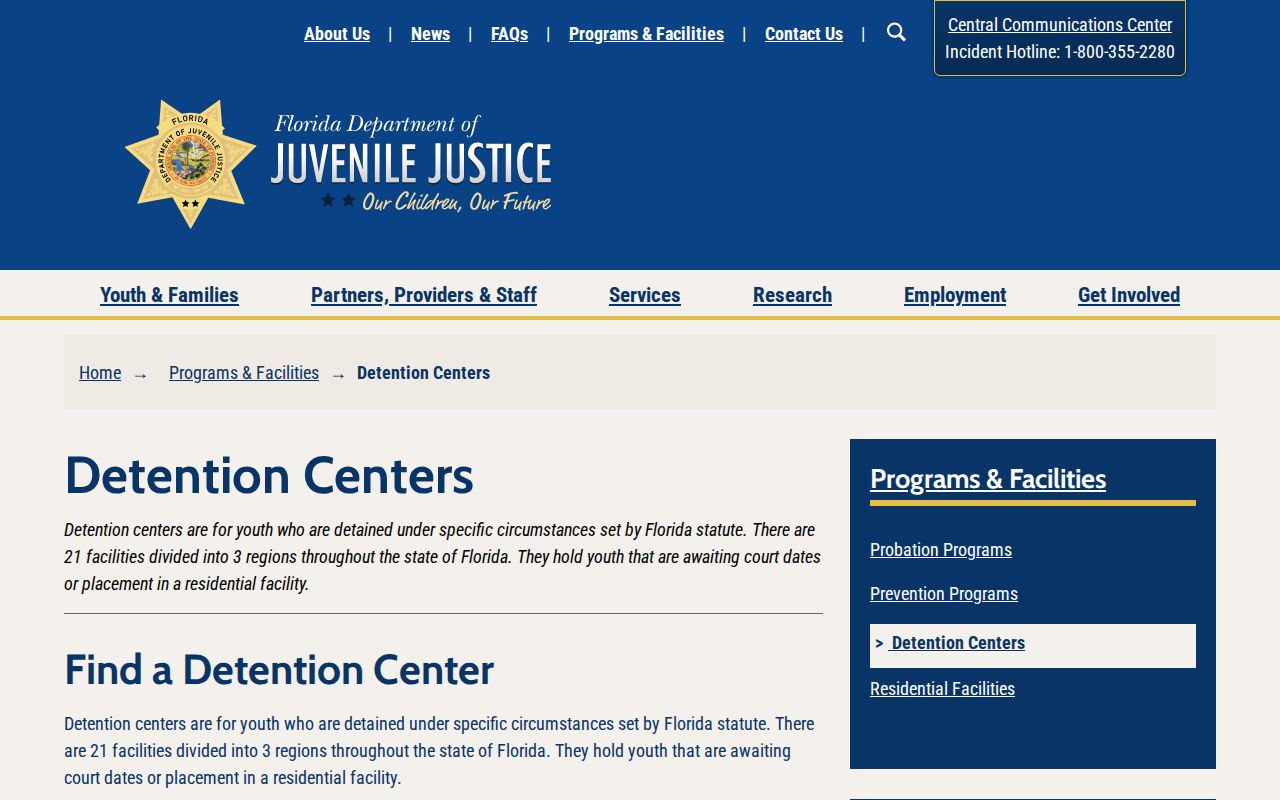
The directory establishes service coverage and contact context. It does not publish youth names, custody status, release dates, or case details.
Regional service can cause confusion when a Suwannee family expects the relevant facility to be in Live Oak. The center's Gainesville address is consistent with a multi-county DJJ model. Court and case responsibility can still relate to Suwannee County. Physical location, court venue, and the assigned DJJ office are separate facts that should each be confirmed through authorized records.
Keep Alachua Youth Records Separate
Three public adult systems often create false leads. Suwannee SmartWEB reports adult county jail bookings. FDC's offender network reports qualifying adult state prison and supervision records. VINELink is an alert and status service that depends on agency data, but its broader Florida coverage does not convert confidential juvenile material into a public case archive. None should be presented as a way to expose a youth's detention or release details.
- Juvenile detention
- Secure youth custody while awaiting court action or placement under the juvenile system.
- Placement
- A court or DJJ-directed setting that may follow detention while the case continues.
- Transfer
- A move between custodians or settings, not necessarily the end of legal oversight.
- Authorized party
- A person whose role and identity permit access under the case and applicable law.
An adult system may return a person with the same or a similar name. That is not evidence about the youth. Do not compare photographs, publish guessed identities, or infer release from an empty result. The Suwannee County adult release overview covers adult facilities and expressly keeps juvenile access outside that workflow.
Confidential handling also calls for care when sharing records that an authorized person receives. Follow counsel, court, and DJJ instructions about storage and disclosure. A lawful private copy does not become a public record merely because it reached a participant.
Alachua Youth Detention Context
Suwannee County's detention history includes adult county jails built on the courthouse grounds in 1869 and in 1938, with the later building used for more than 55 years. That local history is distinct from today's regional DJJ arrangement. Alachua Regional Juvenile Detention Center is a modern state-operated youth facility serving a multi-county region from Gainesville.
The contrast matters for archive questions. An old county jail record belongs with county or sheriff records based on its date and custodian. A current juvenile detention matter belongs with DJJ and the juvenile court under confidentiality law. The shared word “jail” in casual speech does not merge these sources or their access rules.
For a Suwannee youth, start with the present case paperwork. Confirm the correct facility and assigned worker, then use the authorized route. When the concern is a court date, release order, placement, or return to a guardian, ask the person responsible for that part of the case. That focused approach protects the youth and produces a more reliable answer than any public adult search.
Public Record Search
Sponsored Results